
Get Someone Out Tonight: How Bail and a 10% Bond Work

Get Someone Out Tonight: How Bail and a 10% Bond Work
Bail is the dollar amount or property a court sets to release someone before trial; a bond is the guarantee, usually backed by a bail bondsman or another third party, that promises the court will get that money if the defendant skips a court date. If you can pay the full bail amount yourself, you post it directly with the court and can get it back later. If you can’t, a bondsman posts the bond for a nonrefundable premium, commonly around 10%, and your loved one walks out today.
TL;DR:
- Cash bail is refundable if the defendant attends all court hearings, while bond premiums paid to bondsmen are nonrefundable regardless of case outcome.
- Bail amounts are set based on flight risk, the severity of the offense, community danger, criminal history, and local ties, influencing the likelihood of release.
- Bond types include surety, property, unsecured, and secured bonds, with bondsmen often requiring collateral and co-signer agreements to recover losses if the defendant skips court.
- State rules directly impact bail options, premiums, and collateral requirements, so verifying local regulations and court options is essential before making a decision.
- Speedy release requires knowing the correct bail process: paying directly for cash bail or engaging a licensed bondsman, with preparation of full legal details ready to save time.
Table of Contents
- What Bail Actually Means and Who Sets It
- What a Bond Is and Who’s on the Hook
- Key Differences You Need to Know Right Now
- What Bail Bonds Actually Cost
- What Happens if the Defendant Misses Court
- Rules Change by State: What to Check Before You Sign
- How to Get Someone Out of Jail: Step by Step
- The Publisher’s Take: Why Speed and Transparency Matter Most
- How Mjbailbonds Gets a Loved One Home Faster
- Sources
What Bail Actually Means and Who Sets It
Bail is collateral. A judge names a dollar figure (or accepts property) that the defendant, or someone on their behalf, hands over to guarantee they’ll show up for every court date. Miss court, and that money is gone. Show up as required, and it typically comes back to whoever paid it, sometimes minus a small administrative fee.
Judges don’t pull bail numbers out of thin air. Under standards described by Cornell Law School’s Wex, courts weigh flight risk, how serious the alleged offense is, whether the defendant poses a danger to the community, prior criminal history, and ties to the local area like a job or family nearby. A first-time offender with deep roots in town gets treated very differently than someone facing a violent charge with no local address.
Bail can take several forms:
- Cash bail: the full amount paid up front, in cash.
- Deposit bond: a percentage of the total paid directly to the court instead of the full sum.
- Property bond: real estate or other assets pledged as collateral instead of cash.
- Release on recognizance (ROR): no money changes hands at all; the defendant simply signs a promise to appear.
Refunds hinge entirely on appearance. According to FindLaw, cash bail is generally returned once the case closes, provided the defendant attended every required hearing.
What a Bond Is and Who’s on the Hook
A bond is a legal promise, not a pile of cash sitting with the court clerk. It’s the mechanism that lets someone get released without paying the full bail amount out of pocket, because a third party is vouching for them financially. That third party, usually a licensed bail bondsman, tells the court: “If this defendant doesn’t show up, I owe you the full bail amount.”
Common bond types include:
- Surety bond: a licensed bail bond company guarantees the full amount for a fee.
- Property bond: collateral like a house or car backs the bond instead of cash.
- Unsecured (PR) bond: the defendant owes the money only if they fail to appear, with no upfront payment.
- Secured bond: requires some form of collateral or partial payment before release.
Professional sureties operate under state licensing rules, and those rules vary widely. When a family hires a bondsman, they’re usually signing a contract as a co-signer, agreeing to cover losses if the defendant disappears, sometimes backed by collateral like a car title or home equity. The UW School of Law notes that bail bondsmen exist specifically for defendants who can’t front the full court-set bail themselves.
Key Differences You Need to Know Right Now
The distinction between bail and a bond comes down to three things: who pays, whether you see that money again, and what obligations follow you afterward.
- Who pays: with cash bail, the defendant or family pays the court directly; with a bond, a bondsman fronts the risk and charges a fee.
- Refundable or not: cash bail is refundable if the defendant appears at every hearing; a bondsman’s premium is gone the moment it’s paid, win or lose.
- Ongoing obligations: posting your own cash bail ends your financial exposure once the case closes; a bond contract can mean collateral liens, co-signer liability, and sometimes check-in requirements until the case resolves.
- If court is missed: under cash bail, the court simply keeps the money; under a bond, the bondsman is liable for the full amount and may come after collateral or co-signers to recover it.
The tradeoff is straightforward. Paying cash bail costs more up front but nothing extra later. A bond costs less up front, a fraction instead of the full amount, but that fraction never comes back, and it can pull family members into contractual liability they didn’t fully expect. Families weigh this constantly, and it’s worth reading through the reasons people choose a bond even when they can afford bail before deciding either way.
What Bail Bonds Actually Cost
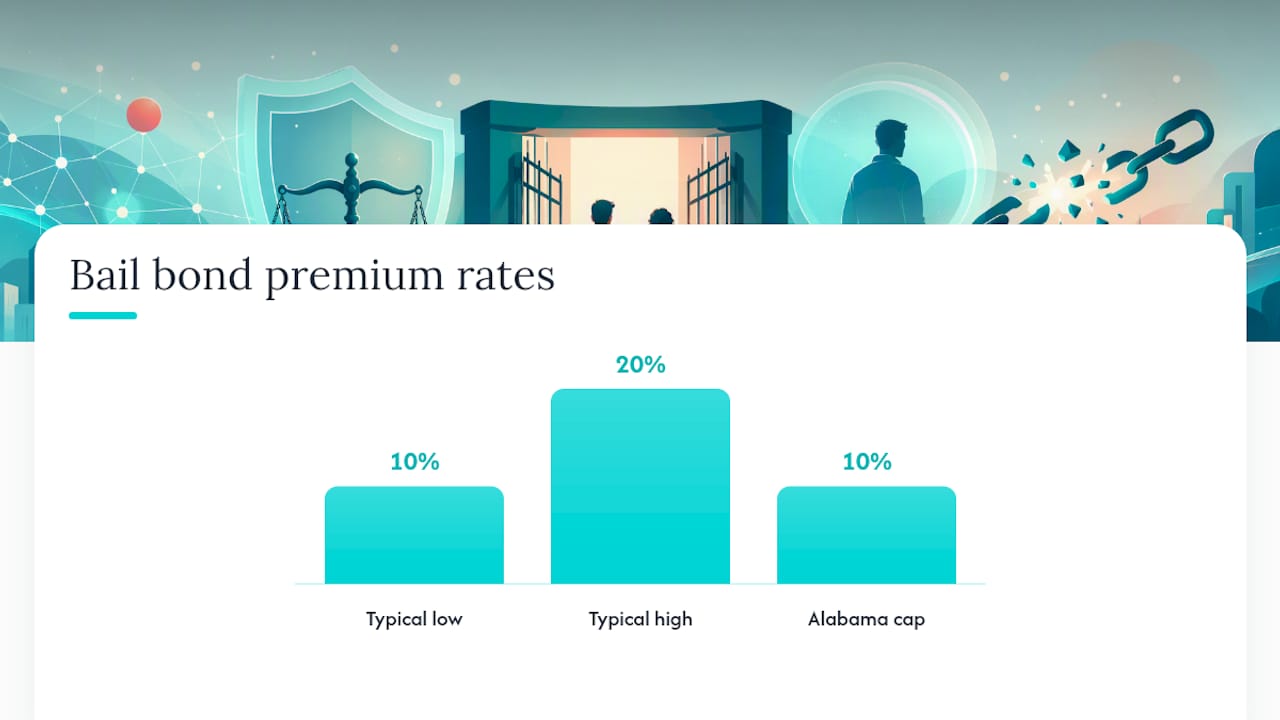
Bail bond agents typically charge a nonrefundable premium, and according to Investopedia, that fee commonly falls between 10% and 20% of the total bail amount. On a significant bail amount, the fee paid to the bondsman, not the court, is nonrefundable regardless of the case outcome.

Some states cap that premium or mandate a specific rate. In Alabama, for example, bail bond premiums are state-regulated at 10%, which means families know exactly what they’re paying before they sign anything.
Before agreeing to a bond, ask:
- What’s the exact premium percentage, and is it state-capped?
- Is collateral required, and what happens to it if the case drags on?
- Are payment plans available if you can’t pay the premium in full up front?
Pro Tip: Get the premium percentage and any collateral terms in writing before you sign anything. A verbal promise about “flexible payments” means nothing if the contract says otherwise.
What Happens if the Defendant Misses Court
Missing a court date triggers consequences fast, and they differ depending on how release was secured. The court issues a bench warrant almost immediately either way.
- Under cash bail, the court simply keeps the money as forfeiture; there’s no refund and no negotiation.
- Under a bond, the bondsman is on the hook for the full bail amount and will move to collect collateral or sue co-signers to recoup the loss, a mechanic described by FindLaw.
- In states that allow it, bondsmen may use recovery agents to locate a defendant who’s skipped court, a real practical risk worth understanding before signing as a co-signer.
Rules Change by State: What to Check Before You Sign
Bail and bond rules aren’t uniform nationwide. Some states restrict or outright prohibit commercial sureties, while others cap premiums or allow deposit bonds where you pay a percentage directly to the court instead of hiring a bondsman, according to NCSL. What’s standard in one state may not exist at all in another.
Before you commit to any option, run through this checklist:
- Ask the court clerk which release options are actually available for this specific case.
- Confirm whether your state caps bail bond premiums or allows deposit bonds instead.
- Ask the bondsman directly which state rules apply to your contract, including collateral and co-signer terms.
- If anything is unclear, a quick call to a local attorney can save you from a bad contract later.
How to Get Someone Out of Jail: Step by Step
Speed matters here, so know which path you’re taking before you make calls.
If paying cash bail:
- Call the jail or check the county’s online booking system to confirm the bail amount.
- Gather the full amount in cash, cashier’s check, or whatever form the court accepts.
- Post it at the courthouse or jail’s bail window.
- Wait for the release order to process, typically a few hours depending on the facility.
If hiring a bondsman:
- Contact a licensed bail bond agent, ideally one available 24/7.
- Provide the defendant’s full name, booking number, and the facility where they’re held.
- Agree on the premium amount and payment plan, and review any collateral terms.
- The bondsman posts the bond; release usually follows within a few hours.
Pro Tip: Have the defendant’s full legal name, date of birth, and booking number ready before you call anyone. It’s the single biggest time-saver in this whole process.
The Publisher’s Take: Why Speed and Transparency Matter Most
At Mjbailbonds, we operate around the clock across Alabama, Ohio, Texas, and Florida, with live agents answering calls at 2 a.m. as readily as 2 p.m. No voicemail, no waiting until morning. In states where the premium is regulated at 10%, we charge exactly that, no hidden add-ons, and we offer payment plans for families who can’t front the premium in one lump sum.
— Jake
How Mjbailbonds Gets a Loved One Home Faster
Cash bail works if you have the full amount sitting in an account and don’t mind it tied up until the case closes. For most families facing a 2 a.m. call from jail, that’s not realistic, which is where Mjbailbonds fits.
Whether the charge is DUI, drug-related, domestic violence, or an immigration hold, our agents walk you through exactly what happens next, what the premium will be, and what collateral (if any) is required, before you sign anything. If you need someone out now, call Mjbailbonds any hour of the day or visit the Alabama 10% bail bonds page to see premium and payment plan details for your state.
This article is general information, not a substitute for advice from a qualified lawyer. Consult a qualified legal professional about your own circumstances before acting on anything here.
Sources
- What is bail, and how does it work in the U.S. court system? | UW School of Law
- Bail Bond Definition | Investopedia
- Bail | Cornell Law School Wex
- Pretrial release conditions | NCSL